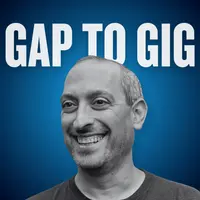


Chris Woods on Overcoming Fear as a Working Dad
 Apple Podcasts Apple Podcasts
 Spotify Spotify
 YouTube YouTube
 Youtube Music Youtube Music
 Amazon Music Amazon Music
 Overcast Overcast
 PocketCasts PocketCasts
 iHeartRadio iHeartRadio
 Audible Audible
 Castbox Castbox
 Castamatic Castamatic
 Castro Castro
 Deezer Deezer
 Fountain Fountain
 Goodpods Goodpods
 Pandora Pandora
 PlayerFM PlayerFM
 Podcast Addict Podcast Addict
 Podchaser Podchaser
 Podurama Podurama
 Podverse Podverse
 TuneIn TuneIn Apple Podcasts Apple Podcasts Spotify Spotify YouTube YouTube Youtube Music Youtube Music Amazon Music Amazon Music Overcast Overcast PocketCasts PocketCasts iHeartRadio iHeartRadio Audible Audible Castbox Castbox Castamatic Castamatic Castro Castro Deezer Deezer Fountain Fountain Goodpods Goodpods Pandora Pandora PlayerFM PlayerFM Podcast Addict Podcast Addict Podchaser Podchaser Podurama Podurama Podverse Podverse TuneIn TuneIn
Key Takeaways
- Overcoming fear starts with bringing your concerns out of the shadows and talking about them openly instead of avoiding them.
- Catastrophizing often drives anxiety; you can reduce its power by objectively walking through the worst-case scenario and realizing it is usually manageable.
- Instead of ignoring fears, conduct a 'pre-mortem' to identify potential triggers and proactively address them through conversation.
- Fear and excitement are physiologically similar; you can shift your mindset from anxiety to action by reframing a threat as an opportunity.
- Aligning your life with your core values provides a 'North Star' that helps you stay grounded and make intentional choices, even when you feel uncertain.
What would your life look like if fear stopped making your decisions?
Chris Woods spent decades building a successful career, including leadership roles at Google. From the outside, everything looked like it was working. But underneath the success was a constant fear of failure, loss, and not measuring up.
Everything changed when Chris flatlined in a hospital bed at age 40. The experience forced him to take a hard look at what was driving his choices and whether the life he was building was actually connected to what mattered most.
Chris shares how to:
- Recognize when fear is driving your decisions at work and at home
- Stop catastrophizing worst-case scenarios
- Build confidence by bringing fears into the open instead of avoiding them
- Use gratitude to become more present in everyday life
Chris offers a practical perspective for working dads trying to balance fatherhood, career growth and the pressure that comes with providing for a family. You don’t need a life-altering event to start asking better questions about your work, your priorities, and the life you want to build.
Dig Deeper
Follow Chris
On his website: https://chriswoodscoach.com
On Instagram: https://www.instagram.com/chriswoodsleadership
On YouTube: https://www.youtube.com/@chriswoodscoach
On TikTok: https://www.tiktok.com/@chriswoodsleadership
On LinkedIn: https://www.linkedin.com/in/chriswoods
His book, Balls & Brains: https://amzn.to/4x7kzhD
Follow Gap to Gig
On Instagram: instagram.com/gaptogig
On TikTok: tiktok.com/@gaptogig
On X: x.com/gaptogig
On YouTube: youtube.com/@gaptogig
On your podcast player of choice: https://rss.com/podcasts/gaptogig
Sign up for the Gap to Gig newsletter: gaptogig.com
Follow Michael
On LinkedIn: https://www.linkedin.com/in/themichaeljacobs
Frequently Asked Questions
How can I stop letting fear drive my decisions?
Gaining awareness is the first step. By acknowledging your fears and identifying the thoughts and emotions behind them, you can consciously choose to act from a place of opportunity rather than avoidance.
What is the best way to handle the fear of losing my job?
Bring the fear into the light by discussing it openly. Instead of catastrophizing, analyze why that fear exists and consider taking proactive steps like having a candid conversation with your employer to clear up any misconceptions.
How do I balance being a provider with being a present father?
Define your top three priorities, such as career, family, and health. When anxiety arises, remind yourself that you are structuring your life intentionally around these pillars to ensure you are doing what matters most.
Is fear always something to be avoided?
No, fear is a natural human emotion that once served to keep our ancestors safe. The goal isn't to eliminate it entirely, but to work in tandem with it by managing your reaction and not letting it dictate your path.
0:00 Chris: Say it out loud, like what's the thing that you're afraid of? And they're like, "Okay, there's no shame in that." And then what I also then try to encourage guys particularly is, 'cause I've been the same way, is I would catastrophize things. I'm like, "Oh my gosh, if that happens, then everything's gonna fall apart, and I'm gonna be destitute, and my family's gonna hate me," and all this other stuff. So, I then encourage, it's like, alright, based on this thing, if I'm spending too much time with my family, I think, am I, you know, what if I lose my job? And like, okay, so we're gonna, first off, before we attack and do all the things we're gonna do to make sure that that doesn't happen, let's just run through it without catastrophizing. So say that happened, say you lost a job. What would happen then? And then they're like, "Oh my God, everything would fall apart." And I'm like, "Really? Would it?"
0:45 Michael: Welcome to Gap to Gig, the show for dads navigating the in-between season when work, identity, and priorities start asking different questions. Here we talk about what that season looks like and how to move through it with intention. I'm your host, Michael Jacobs, and today I'm excited to welcome Chris Woods to the show. Chris has lived both sides of success. He grew up in a tough part of Boston and worked his way into high-level leadership roles, including at Google. From the outside, it looked like he had it figured out. Career, momentum, the kind of life a lot of people are chasing. But underneath that, something wasn't lining up. And then at 40 years old, everything came to a stop. He flatlined in a hospital bed. And that's not a metaphor, it's not burnout, not a bad quarter. He flatlined, and when you come back from something like that, you don't just go back to normal.
1:26 You start asking different questions about what you're building, why you're building it, what it's costing you along the way. And that moment became a turning point for the work he does today, helping people stop operating from fear and start building lives that actually feel the way they're supposed to. Chris, I'm really looking forward to this conversation. Welcome to the show. I'm so glad you're here. Chris: Thanks very much for having me. I'm looking forward to it as well. Michael: My pleasure. So, I want to start with the moment that changed everything for you. Take me back to that moment at 40. When you flatlined, what did it force you to see that you had been avoiding up to that point? Chris: So, what I always tell people, it wasn't like I woke up from the flatline. Well, I did wake up and like, you know, I was surrounded by a lot of doctors in a hospital room, and they were like, you know, "Mr. Woods, we just brought you back after, you know, you were flatlined for a minute and four seconds." It really then kicked off a, a process for me.
2:14 So it wasn't like I just woke up and then had a different mindset. And what I say to everybody is it gave me an opportunity because they were like, "Listen, we're installing a pacemaker." Let me back up. It ended up being cardiac Lyme disease, which I had contracted, and then it tried to kill me, but fortunately, I was in, you know, I was in the hospital, and they, they saved me. So they ended up installing a pacemaker to safeguard against anything crazy happening in the future. So they said, you know, "You'll probably have another 40 or 50 years." So I used that as an opportunity to say, "Well, how do I wanna spend these next 40 or 50 years?" And it really kicked off an introspective process that really had me uncover two things, and those are the things I talk about the most, is, one, gaining awareness around the fears that you have that are really holding you back.
3:01 They may be on the outside, you know, they're pushing you forward and you're achieving despite them. But I try to give people an opportunity that they don't have to flatline in a bed at 40 to be able to take a different look at those things. And the other part of it is taking a real close look at your strengths and your gifts and how much of them you're actually using. And so I use those two things to kinda kick off a change. Michael: Right. I appreciate how you point out that it's not, it wasn't like you woke up, and yes, your life had changed, right, 'cause now you have a pacemaker and, you know, there's probably, you know, recovery elements around that.
3:42 So, like, you didn't just like go back to work that, you know, later that day. But you were able to, in that time, come to a realization, right? It wasn't just like, it didn't just hit you the moment you woke up, but it was, "Okay, now I've presented all this information. I've had a chance to process it." It's like, "What do I want to do next?" Before that moment, though, before you flatlined, from the outside, from what I understand, everything, you know, seemed successful for you, but something maybe felt off on the inside. What do you think was feeling off that you couldn't quite name before you flatlined? Chris: I think it was because I adopted a, a motivation of fear early on.
4:28 So, you know, you mentioned I, I grew up in a tough area of Boston. My dad also died when I was two, so he, he woke up, my mom went to wake him up in the bed and, and he was dead. So, she ended up having to just take odd jobs to, to make ends meet. So I think I internalized that and was like, "Alright, so maybe I don't have as much time as other people have." And also, life is a really scary thing. I'm going to work very hard and achieve and try to then, you know show that I can overcome disadvantages. So I used that as kind of fear. And, you know, fear takes a lot of different forms, and I had a lot of anger and I had, you know, a, a lot of different things that all roll up into fear.
5:13 And so that served as motivation and drive for me, and then, you know, was able to achieve a lot of success. Became a dad and was raising daughters who are now 25 and 21 and, and, you know, very successful in their own way. But I was doing all of these things kind of based on old wiring and programming that started early, and I never really looked at it. It just, you know, it was what I had and what I chose to work with. And, you know, it seemed, as you had said, on the outside, always seemed to be working, but I knew I was running, you know not on joy and not really on feeling good or confident on a day-to-day basis.
5:55 It was always like, "Oh boy, what disaster is going to happen today?" Michael: Right. You were more reactionary, would you say, in that time, and now you are more proactive in terms of choosing the direction you want to go. Chris: Yeah, I think that's right, and I think also one of the things I learned as part of it is to practice gratitude, because the way that you kinda program yourself to view the world is the way the world will then present itself to you. And mine was definitely more fear-driven, so seeing everything kind of coming in as a threat. Whereas if you can turn that mindset more towards gratitude and then also seeing things as opportunities, that it's not all on me that everything if, if I mess up one thing, everything's going to come crashing down.
6:44 Michael: Right. Th-, there's a lot I want to break down there. The fear element, the gratitude element. Let, let's start with the, the fear element here for a second, 'cause, you know, you mentioned that a lot of the fear was of time, I think, of just like you thought you had a limited amount of time, and we all do, right? We only live for so long, right? Life is not infinite, unfortunately. So there was that overarching fear of like, okay, how am I gonna make the most of what limited time I have? But I feel like there were other fears that, you know, come and go. Like, and as you became a dad, like new fears get introduced to you.
7:25 Chris: For sure. Michael: Like, are your kids going to be okay? Are they gonna turn out well? Or is something gonna happen? Like, there's all sorts of different fears that we can react to, right? And, and I want to get to like how to address those fears, like in your talk of using gratitude and, you know, choosing the, the way you want to live your life, but I'm curious, like, what fears, not only that you have experienced, but maybe some of your, your clients or people you, you've worked with have experienced. What are those, what are the quieter fears that the dads that are trying to succeed both at work and at home, what are some of those quieter fears that we carry beyond just like this limited amount of time that we have on Earth?
8:12 Chris: What I see a lot is there's fear one thing when you're starting off in your 20s and your fear like am, am I going to make it and are things going to work out? But I also then find, have found with me and with my clients in their 30s and in their 40s, is that when they are now achieving, you know, and they still have upward trajectory goals, but they are raising a family and they have all these things, it becomes more of a fear of loss than anything else, right? So it's a fear of what if I this upward trajectory that it seems like I'm on flat lines or then turns around. And so that becomes a thing that once you get to a point where you've got things, quote unquote, "to lose," that becomes a predominant fear.
9:00 And it relates to both work, it relates to family, it relates to status and all of these things, and it's completely understandable, it's natural. And, you know, you end up taking on responsibilities as a dad and a provider and all these other things. So it, it makes all the sense in the world that those things would seep into your brain, and more than seep in, become predominant in, in a lot of ways. And so what I always say, they always kinda teach you in coaching, is acknowledge and validate, is like I acknowledge that feeling, and it's completely understandable because it is. So what I then try to do is, speaking then from experience, because I'm now 56 years old, I've got a 25-year-old who's graduating from medical school this week, becomes a doctor officially, and then my youngest just graduated from college last week.
9:50 And so I've got two thriving young adults, and I realize I'm at a different stage now. Michael: Yep. Chris: But what I also see is that I see this as an opportunity to be able to speak with men who are at different earlier stages, and knowing that I have lived through it. And one of the things I always say is you don't have to flatline in the bed at 40 years old to, you know, gain the, the value from, you know, what I'm able to share. So I think that that's right, and getting back to the idea of the fears and the quiet fears that then come around on loss. Michael: Yep. Chris: I think the way that I've found it to be most impactful and helpful for men is to help them reconnect not only to gratitude, but a form of faith in any way that they have, and make sure that they feel like they are following their own North Star on this.
10:43 What I always say is like, "What are the three most important things for you?" And oftentimes it's, "You know, I'm gonna be a dad, it's my job, and it's my health." And I'm like, "Okay. So these are the things that then you've established are the most important. Let's actually structure your life around that so that you're addressing that, because in times of anxiety, you can say, 'These are the three things I said are most important, and I know I'm doing everything I can for them.'" Michael: Right. Would you say that fear often temporary, or is it, I know we're always gonna have new fears that come up, but like you said, the fears in your twenties are different than the fears in your thirties and forties, and do you think it's, fears kind of ebb and flow and that's, you know, whatever you are fearing now may not be the same thing you're fearing later?
11:31 Or is it, you know, fear is going to be there, and you just have to figure out ways to manage it, cope with it? Chris: So I think fears morph and change in their outward appearance or your internal interpretation of them Michael: Sure. Chris: over time. But another interesting way to, to look at it, too, is one of the things I have my clients take is a thing called an Enneagram. So it's like a personality test, but it also within it shows how fear shows up for you based upon your personality. And so there's like four or five different, you know, archetypes of it. And what's r-, really insightful for it is based upon that sometimes people fear different things.
12:17 So some people will fear like a public embarrassment more than other people fear. And then other people don't necessarily fear public embarrassment, but they fear letting others down, for example. Michael: Right. Chris: So, I do think that they, the, the representation of them can evolve over life stages, but I also think that what you're afraid of and your, your primary fears can alter by person as well as by personality, as well as previous experience and, you know, life experience of things that have instilled that for you. And then as you know, like what you are afraid of or what you love is what you look for, and what you're then, you know, you'll, you'll end up seeing that over and over in life.
13:01 Michael: Right. Do you, it's interesting that you talk about fear morphing, right? Fear never, we're always gonna have some fears, right? I think to fear is to be human, most likely. So it's not a matter of avoiding fear, right? It is a matter of how do you control what you can control, so that you can not necessarily overcome your fears, but work in tandem with them. So, like, if you are afraid of losing your job because you're trying to spend more time at home, for example, right?
13:46 It's the, that fear may be more prominent when your kids are younger, and as they grow older and start to go off on their own, s-, maybe you don't have that same type of fear, but there is a fear there that what parts of that can you control? You can control k-, sort of how much you work and the quality of work that you put in, but you can also control how much time you spend at home and how much time you spend with your spouse, with your friends, with your kids, and how do you kind of make those things flexible. So, the, from what I'm gathering from what you're saying is that fear is going to be there.
14:28 It's how you control what you can that you can, that fear doesn't lead you, but you lead it. Chris: Yeah. I think that's dead on. And so what I'll, as they say like in poker, I'll see you and raise you. So I'll, like I'll see you on that. And the thing I'll say in addition to it is, sure, fear is always going to be there. And what I mention even in my book, I call fear is the OG, so it's been around forever and it serves a real purpose, you know, to keep us safe. And it, you know, it, it helped our ancestors get their genes into the next generation, which is the reason that wh-, why we're here. So a couple of things around fear that I always recommend people have, if there's something around that, like say for… as a recurring one, like, "Oh my goodness, what if I lose my job?"
15:14 Instead of just telling people, "Just don't think about it," what I always try to encourage is like, let's bring it out into the light and let's put a flashlight on it, because fears, when they're left unaddressed, and a lot of times I find this with guys, and this, frankly, is the reason why I wrote my book and called it Balls and Brains, is that it's an attention grabber for men who otherwise don't wanna talk about this stuff, right? Michael: Right. Chris: And it gives them an accessible point to be able to do this. So what I say on this is actually look at it and, and say it out loud, like what's the thing that you're afraid of? And you're like, okay, there's no shame in that. And then what I also then try to encourage guys, particularly, is, 'cause I've been the same way, is I would catastrophize things. I'm like, "Oh my gosh, if that happens, then everything's gonna fall apart, and I'm gonna be destitute, and my family's gonna hate me," and all this other stuff.
15:59 So I then encourage is like, or based on this thing, if I'm spending too much time with my family, I think, am I… you know, what if I lose my job? And like, okay, so we're gonna, first off, before we attack, do all the things we're gonna do to make sure that that doesn't happen, let's just run through it without catastrophizing. So say that happened, say you lost a job, what would happen then? And then they're like, "Oh my God, everything would fall apart." And I'm like, "Really? Would it?" And then we just, you know, talk it through, and being able to then put that into light as if it's actually hap-, actually happened is like, you would get through it, and there's a way we could get through it, okay? So that's good. And so then it, it kinda reduces, lowers your shoulders and reduces the fear on it. And then another thing I then try to recommend people do is like, say that even happened, instead of doing a postmortem on it, let's do a pre-mortem.
16:43 Why would that have happened? And then they're like, "Well, I would've been slacking off at work," or, "My boss would've been pissed that I was taking the time off from these things." And I was like, "Okay, so have, have the conversation with the boss ahead of time to make sure that this isn't like you're ma-, imagining it in your head that the axe is gonna come the next time." It's like actually maybe have the conversation and say it out. So do all the things that you can to bring it to light as opposed to ignoring it, because trying to push it down doesn't work. It actually makes it even stronger. So that's the first thing I'd say about it. And then the second thing that I do, and I mention it also in, in, in my, my coaching, is I try to then get people, when they're thinking about the things that, you know, trigger them about fear, I'm like, "Let's apply that thing that they call the TEA framework."
17:28 What's the thought, the emotion, and then the action. So, for example, ones that I used to have at… when I worked at Google, is that when I was doing well, and then I got to the point where I was like, "Oh boy, what if I get exposed that I'm not really that good?" And so if I got a new opportunity, my first thought was like, "Oh boy, this might expose me that I'm not really that good." And then the emotion from that would be anxiety. And then the action would be, I'm gonna avoid this. How can I find a way to, like, duck this? And so what I then ended up helping myself through, and again, this is not flipping the switch and I'm not hypnotizing people, but like another thought would be instead of like, "Oh my God, this could end badly," it was like, "This could actually be a really good opportunity for me." I could, you know, first off, you could learn things, but you could then be very successful, but it could even give you a promotion, and it's a lot of these things.
18:15 So if that's the thought you have instead, the emotion's no longer gonna be anxiety, it's gonna be excitement. And, you know, fear and excitement, anxiety and excitement are essentially the same emotion. It's just a different thought that's triggering it. And then lastly, my action, if I'm excited about it, won't be to avoid it, it'll be to actually go into it. So it then gives me something to help me reprogram and rewire my thoughts. But you wouldn't be able to do any of these things before you actually gained some awareness around it and were able to actually talk about it and bring it out to the light. Michael: Alright. Yeah. I appreciate that perspective so much because, like, for me, and I think for a lot of dads that I, I talk to, it's, there's a fear of the unknown, right?
18:57 That is, like, the ultimate fear. Like, we don't know what happens, Chris: Sure. Michael: right? And so that makes it so easy for us to, as you say, catastrophize the situation. So it's like, "Oh, am I spending too much time at home? I might lose my job." Well, where does, where does the logic play into that, 'cause right now that's an emotional thing? This may happen. Chris: Mm-hmm. Michael: Why, right? Like, like you say, bringing it out, putting it into the light, and exposing it for what it is and being like, "Okay, this is the actual situation." Chris: That's right. Michael: Right, and it's, the vast majority of the time I've found that it not catastrophic. It's actually pretty normal, right? Chris: For sure.
19:38 Michael: It's like, yes, when we do have kids, we do start spending a little bit more time at home, right? And our thoughts may differ a little. We might not check that email at 11:00 PM because we're changing a diaper then, or we're, you know, trying to help our kids finish their homework so they can get to bed and get up for school in the morning. And it's… And that's okay, right? Like, Chris: For sure. Michael: There's an expectation in our society that we do have lives outside of the office, and we do, like, in that particular case, it's like, okay, yeah, why am I making this out to be so bad? It's 'cause I hadn't thought through the logic, right? I'm letting emotion lead as opposed to logic and fact and normal order in the system.
20:20 And it is simpler than I think we make it out to be, 'cause it's so easy to fall into the trap of, "Oh, this is gonna be the worst thing ever. I'm, you know, going to fear this." When in reality it's just like, no, take a beat, look at it, and be like, "Oh, that's all it really is." And, I, so I appreciate how you just make that s-seem so, or not seem, you make it, make me realize like, no, it's really a simple process. You just have to be willing to do it, right? Chris: That's exactly it. So it's the habit, right? It's a power of habit. And a lot of these things that we've just grown, and they've grown kind of insidi-, insidiously within us, is that it's, it's fear-driven.
21:04 And so it's a habit that we established earlier, and that's just the way we think. And it seems on the outside to be working, this, like, fear-driven habit that we're having. But what I always then say is, "Sure, it might seem to be, but think about how much better life can be if you're not." So it doesn't… And that's another thing that I, I've, I found myself, is that guys would be like, "Yeah, but if I lose this fear-driven, I'm gonna lose my edge, and then I'm not gonna be as successful, I'm not gonna be as driven." And I was like, "Again, I think these are all so outdated concepts," is that you can be all of these things. It just, it starts with an awareness of the thoughts that you have that can either be your best friend or your worst enemy. And so that's what I always say to people.
21:45 So there's one question I always ask people at the beginning of this, right? And, and I always say it's not mine. So I, I borrowed it. I've adopted it from a guy, Peter Crone, who's this amazing kinda, like, mindset and life coach guy in England. And he asks the question, so I'm a-, I'll say this out loud and, and for your audience, too. This is, I find the most powerful thing, is he asks the question: "Who would you be in the absence of your concerns?" Okay? So doesn't ask you what your concerns are, and he just asks you who you'd be in the a-, and the way he phrases it is great, "In the absence of your concerns." And what I love about that question is because it opens up in your brain and in your heart and in your soul a viewpoint as to who you can and would and will be if you can get beyond these things, right?
22:38 And I always then encourage people is then to write down the stream of consciousness that comes, because that version of you can exist. And so what I always then say is use that as the starting point, is that if, like what I was saying is like I'd feel a lot, you know, freer and, you know, less anxious, and I'd take even more risks, and I would live life more joyfully, and I'd take big swings and all these things. Michael: Right. Chris: And so that's there for you.. No one else planted that in your head. That was you responding in your head to that question that just kinda like opens a magic door. So I always recommend people start with that question. Michael: I love that. I love how the, the question, because it strips away the concerns, you get to skip a step essentially to be like, Chris: Isn't that great?
23:26 Michael: right, of like, "Okay, this is what I, Chris: I'm there. Yeah. Michael: this is what I want to do," right? Ok, then the follow-up question is then why not? Right? Chris: There it is. And then you'll say, "Well, because of I'm afraid of this, this, this, and this." And be like, "Okay, so let's bring those into the light." Michael: Right. Exactly. And then how do you address those? So, I assume then, you, if you're able to start identifying what those fears are, you know, you had mentioned that one of the things that you like to do is related around the idea of gratitude, right? As a way to kind of manage some of this fear. Can you talk to me a little bit more about what that really means to you and sort of how you apply it?
24:08 Chris: Yeah. So I'd say it a couple ways. One, when you then start just paying attention to all the things you can be grateful for, it brings you back into the here and now, right? And I always say, and I've got it actually on my wall right there, it says, "Be here now." And the whole idea of the way to best live life and operate at work and at home and all those things is to actually be in that moment. And it's very hard in this day and age, right, because you might be somewhere physically, but then your mind is somewhere else, and that's how you miss your life, right? So the idea around gratitude, when you're saying, "I'm gonna practice gratitude," it brings you here right now is to give an inventory of what's happening in your life right now. And I also think just like habits, right, and neural pathways that build up, we were saying that, you know, they can be bad habits for us, thought patterns.
24:56 But the more you're, you look to practice gratitude, start it off once or twice a day, first thing in the morning, at night, it can help rewire your brain. And in rewiring your brain, you end up seeing the world differently, and you can evolve away from less seeing things as they are everything's a threat and everything is something to be afraid of and more about like, "Okay, I've seen that, but right now everything's great, and these are all the things that are really good in my life." And what I then end up then using that as a, as a jump off point to what I then teach people in terms of how best to, you know, structure their work lives and really their lives, is to lean in, identify and lean into the things that they're really good at.
25:42 Because what you'll find is it becomes a flywheel. If you're doing more of the things that you're really good at, you'll like it, and then you'll do more work at it, and you'll get better, and you'll get more recognition for it, as opposed to staying in roles and doing things that you're not really built for, and you're grinding, and you're working your butt off just to get to average. And that's a miserable way to live if you don't have to. So what I always say to people is approach it like the hierarchy of needs, the Maslow thing, right? It's like, first off, you need a job because you need the money and you gotta pay the bills and all that other stuff. But if you can get yourself the, if it's not immediately, but at least start thinking about a trajectory of how can you get yourself into thing that you're doing more of the things that you actually enjoy doing, you'll find your life works so much better.
26:26 It becomes this, you know, synergistic way. So I always say is like, if you can reduce the fears that are holding you back, identify and then go all in on the things that you're really good at, you'll really feel like you're in flow. So when you're, as a parent, when you're at work, and then every part of your life can actually be more of this authentic version of you, as opposed to a stress-driven, compartmentalized, catastrophic thinking way of living your life, which is no fun. Michael: No, not at all. Not at all. The idea that gratitude will, is a way to create a more positive flywheel for you, right? It, it's, I like that idea because like time, we have a limited amount of energy, Chris: Mm-hmm.
27:12 Michael: right? And so, I mean, that's why we have to sleep and we have to eat and all these things to, to gather energy. So it's like you have a limited amount of energy. How do you want to expend that energy? Chris: That's right. Michael: Do you want to expend it on, in a defensive posture of kind of, you know, just man, trying to deal with your fears? Or do you want to spend that on things that you appreciate and that you enjoy and that make you happy, maybe even bring you energy themselves? And with gratitude, that's a way to expend your energy in a way that brings you closer to that realm of happiness, of positivity, that you get to do the things that, you appreciate the things that you, you do have and you do get to do, which then leaves you less energy to worry about your fears, right?
28:01 So it, it just keeps snowballing or as you said, like the flywheel just keeps spinning. It's such a, it's an eas-, again, it's an easy thing to do if we are cognizant of it, right? Chris: That's just it. Michael: It's so easy to just take things for granted, take what you do have for granted. Chris: It's habits. So this is what I say all the time, is that for all of these, exactly this conversation we're having and then all this, the reason why I do what I do now is because I've, I've learned it kind of the hard way and now at 56 and, and looking back on it. And so I'm like, I can save people maybe a lot of this kinda hardship on it. Because what I'd also say about the practicing gratitude, someone said this to me years ago, maybe I read it, is, like, think about the universe, about they wanna, like, they wanna give you things.
28:50 And if they keep giving you things and you don't say thank you, they're not really gonna wanna keep giving you gifts. Like, if you give people gifts and they're like, "Thank you so much. That was so thoughtful," or someone else you keep giving gifts and they never say thank you, you're like, "You know what? I'm giving these gifts to somebody else." And so I love that idea is the more that you're grateful for, the more the universe kinda rewards that mentality. Michael: Yeah. Love that. That's great. I, so I want to talk about this framework that you created: the Balls and Brains framework, right? It's on your hat, it's your book, it's, it's a, for you, it's like your work, right? It's your, your life's work. And at a high level, what does that actually mean in real life for someone trying to navigate work and family and life?
29:38 Chris: So what I say is, you know, it kinda recaps the conversation we've had up until now, is, you know, a lot of times when people just s-, think they need to work harder or they need to have just better discipline or all these other things, just, you know, put in more effort or more hours or better time management and all that stuff. And what I say is, like, let's actually address this at the root first, and then we can build it on there. So the balls part of it is first addressing the fears that hold you back from being the authentic all-in, you know, balls-out version of you. Michael: Sure. Chris: And so that's that question who you, who would you be in the absence of your concerns? Because then that, that, you've answered the question and you're like, "That's the guy I'd be." They'd be like, "Okay, cool." So we know that that could be a North Star for us.
30:24 And then the brains part of it is actually identifying and not just, like, you know, you answering the question. Let's put a diagnostic against this as to what you're really good at, right? So that's this Clifton StrengthsFinders that I use. And it was given to me, like, near the end of my career at Google, which made me realize, it just put it kind of in black and white, is when I had joined Google initially, it was still early days. It was before they bought YouTube, and we were still evolving. So it was up to salespeople like me to kinda come up with creative stuff just to get deals done. And then by the end of it, the company was growing massively. And as you know, when it's that big, you need to have structure and frameworks, and people just need to stay in their job and do that because there's 180,000 people there.
31:05 And I was like, "This is less me. This is less me being in this contained thing." But this Clifton StrengthsFinder, amongst the things they told me, they're like, "You 100% should be in either entrepreneurial environments or turnarounds." So I initially left and did an entrepreneurial one, and then got recruited to do turnarounds, just to turn companies around, go in and, and fix these companies, because it leaned into my strengths. And so that's what I say to people is the first two steps on it, we gotta start with the foundation. What's holding you back fear-wise? And then secondly, let's get a real clear thing on what you're really good at and how much of that are you actually doing. Michael: Yep. Chris: And then so from that, we then reset your goals. They could be very different than the ones you had before we started this process, 'cause you were building them maybe based on an outdated version of you.
31:50 And now that's gonna be the goals, and then here's the hard part, and this is the thing I mentioned before, is that then we need to address mindset changes and daily habit changes, because that's where it actually comes down. So for all of the things that have been holding you back, and you mentioned them before, that I say that those are habits. Those are habits of thought. That's mindset. And they were established with no real, you know, discipline or strategy behind it. If we can readdress this based upon your goals now that we have an awareness of the fears that were holding you back and what you should be do-, leaning more into, that's how you lead a, a better all-around life. Michael: What was it, what did it feel like when you left Google and then you went to, to, you went the entrepreneurial route, you went the turnaround route because those were more aligned with your strengths.
32:39 How did that, what was the feeling like? Was it, how much different was it than when you were working at Google? Chris: It was a lot riskier. Like, I knew it was a lot riskier, right? And a lot of people that I, and after I left, they're like, "What? What would you do that for?" Right? Like, I know a lot of people who are still there at Google who, like, stayed there their whole lives, and that's great. But I knew that that just wasn't who I was. I'm not somebody who can just rest and vest, as they said. And so I knew that it was going to be pluses and minuses. And the pluses was that it was going to be more, you know, in tune with who I am and play to my strengths. But the minuses would be like, you know, if things weren't going well, I'd be like, "Man, why did I leave that big, safe gig?"
33:19 So it was more like staying true to the reason why I did it, and that's made all the difference in the world. And I'm so grateful that I actually not only did it, but that I actually had the experience beforehand. So when I have conversations with people who are at various stages of their lives, I can give them an informed perspective as opposed to I'm just this theoretical guy who's full of. Michael: Right. Exactly. Experience trumps all else. Chris: Yeah. Michael: Right, you can't, there, you can't learn experience through a book, Chris: That's right. Exactly. Michael: right? You have to experience it. Chris: So th-, that's what it is. So it's like I'm here to not just, you know, bore people with my story, but it's more to, like, inform and help them w-, apply it to their own lives, to help them find what's really real for them.
34:06 And what I always say, and I haven't mentioned this enough, is that it's about evolution as opposed to revolution. So when we have these conversations, it's not them saying you're gonna blow your life up. It's like you're not doing it. Particularly your audience has kids at home, and you're not gonna do that. It's more just like once you establish that kind of North Star that might be a little different than the trajectory you're currently on, let's start mapping a thoughtful evolution towards it as opposed to a very potentially damaging, destructive revolution. Michael: Right, and your experience, you don't know what you like and don't like until you experience those things, right? Chris: Sure.
34:47 Michael: So, you don't, you didn't know what it was gonna be like to, yes, your personality test said, yes, you would like turnaround, like Chris: managing Michael: a turnaround. You didn't know until you did it, right? But then you did it and you're like, "Okay, there are things I Chris: Exactly right. Michael: like about this, things I don't like about Chris: Mm-hmm. Michael: this," right? But you don't know what those are until you've, gone through it. Chris: Yeah. Michael: But then you can start to, the more you experience, the more knowledge and wisdom you have to figure out what are the things that drive my fears and what are the things that will allow me to move past those fears, right? You don't know what you don't know until you've experienced it.
35:28 And then once you have, it's like, okay, I know that, you know, doing spreadsheets all day is gonna cause anxiety, so I need to, you know, I didn't know that until I got a finance job. Chris: That's right. Yeah. Michael: I got a finance job. It's like, well, okay, spreadsheets aren't my thing, so I need to find work where I can kind of reduce some of that stress. And, you know, spreadsheets aren't my thing, but I love talking to other people, so maybe I need to, you know, go more the, the sales route, or I need to go in a creative, you know, find a, a more creative role. And, yes, in today's day and age in this economy, it's difficult to find the, the right role for yourself, Michael: and maybe you have the ability to start something, maybe you don't, but you can at least start to position yourself to spend more of your energy, more of your time doing the things that bring you happiness, bring you positivity, and less time worrying about the things that are bringing you stress, right?
36:23 But you don't know that until you've done some of these experiences. So, I imagine your coaching work is different with people in their 20s versus Chris: Yes Michael: people in their 40s, 'cause they've probably had different levels and different types of experiences depending on age. That's not to say that somebody in their 20s doesn't know exactly what they want to do with life. I think I figured out at a very young age what I enjoy doing. I've been doing that for the last 25 years. But I didn't know some of the drawbacks, I didn't know some of the other benefits to running my own business until I did it, Chris: Sure. Michael: right? I didn't know what some of those challenges were. Chris: Mm-hmm. Michael: Chasing down people for payment, not a fun experience for me, right? But it's something I have to do, but how do I minimize that?
37:04 And also like, you know, there are things I can do, things I can set in place so that I minimize some of those tasks that bring me more stress, right? So that I can live a more fulfilling life because, to me, the less time I am, I spend chasing down customers for payment, is more time I can be doing things that mean something to me. Chris: Right, as they say, spending more time in your genius zone, right, is, like, the stuff that you're actually good at and, you know, where can you outsource things. But also even if you're starting an evolution at your job is not to quit it necessarily, but, like, to have a frank conversation after you've done that analysis with your boss is like, "This is the stuff I'm really good at. This is the stuff that I'm not as good at." And, you know, you could keep grinding about it, but, like, can we evolve the job that I'm doing more of the good st-, more of the stuff that I'm really strong at and, you know, less of those other ones?
37:53 As well as a thing that I recommend to people sometimes is that if they can't necessarily do that as much, if you identify some of the things in this StrengthFinders that you're really good at that you're not doing a lot of it, can you start doing some of that outside of work? Just so that you're starting to exercise the gifts that you were given and the things that you're naturally good at. And you'd be amazed at how then, you know, the universe can conspire to bring other things to you if you're actually working, you know, in your strength zones as opposed to spinning your wheels and what I always say, playing defense on your weaknesses. I want you to go full offense on your strengths. Michael: Right. Right. Yeah, I agree. And so that leads me to, like, something I really want to ask you about, like playing offense on your strengths instead of playing defense on your, your weaknesses and on your stresses and on your fears.
38:40 We talk about that a lot with work and our job. How does that shift for, you know, to playing offense with your strengths instead of playing defense to your weaknesses? How does that show up differently at work versus at home? Chris: Mm-hmm. So what I, what I think, and I see that a lot of times on these things, is, you know, oftentimes husband and wife, you know, will divide and conquer some things in different, you know, and, and pick up different roles and responsibilities, and that's, and, and that makes sense, and you have to do it. One of the things I have encouraged some of my clients to, and the, the men ones, is to take a look at it and it's like, you know, not to sound old-fashioned, but, like, can you really lean into the, the dad, the male-driven stuff, right?
39:26 It's like that's the stuff that you, is inherently kinda in you, and, you know, is, can be good long term for your, your kids to see that dad was doing dad stuff and mom was doing mom stuff. That doesn't mean to come across sexist, like you're not doing dishes or anything like that, but it's like, you know it when, when you know it. So it's, it's a, it's a one thing of just kind of dividing and conquering and finding a balance with your spouse, but can you lean into the things that you're really good at and you're doing that with your kids so that, you know, that just further becomes this flywheel is it's natural and it brings out more joy in you, and it brings out more joy in the kids. So that's sometimes an interesting exercise for people to go through because then they'll end up altering some things they're doing, you know, 20, 30%, or whatever.
40:13 But I think that that gets back to doing the things that you were put on here on Earth to do, and sometimes just gaining an awareness that you're out of alignment on those things, and that's what I say all the time, is that can make all the difference in the world. And again, I, I, I'll say this again, my whole idea about moving people from grinding to aligning doesn't then equate of a, of a blowup, of a revolution and ripping things out at the roots. It's more just like you're not a disaster. It's more like you just know that things could be better. So as opposed to me just pontificating about what I think you should do, it's more like let's actually have an engaged, structured conversation where you're using Enneagram around personalities and like Clifton StrengthsFinders around strengths, and we build it in reality from that.
41:02 And again, you can apply that similarly to your, your home life when you actually take a real look at it. Michael: Right. So what do you think then the first step is to look at your home life of like how do you align that better to what your strengths are and, you know, still address the fears you have, but not let the fears kind of dictate how you show up at home, too? Like, what's the first step a dad could make to improve, you know, how he feels about how he's showing up at home? Chris: So I'd, I'd start with the positive. I'd say, "What's the stuff that energizes you? What's the great fun stuff where you feel like you're in your highest purpose as a dad with your kids?" And start with that.
41:46 Like, that'll elevate you into thinking like, "Oh, this is awesome. I love when we do this, and I'm really good at this." Michael: Sure. Chris: And, and I'd say, you know, conversely, "What's the stuff that currently causes you, you know, angst or discomfort or friction?" And maybe then ask why. And so why is that? And it could be that it's not something you like to do, or it could be you're just assuming that your spouse has asked you to do that because they don't wanna do it. Whatever it is, but bring it to light. So I'd start with the good stuff, find the things that feel like they're not, feel like the things that are grinding, and then ask yourself why, and then pick maybe one of them to evolve or change and work on.
42:32 Again, this is my whole evolution approach as opposed to revolution. And pick it o-, and pick it, and have the conversation with your spouse and say, "Maybe I'd like to do more of this and less of this." As opposed to saying, and believe me, I know this, I w-, with my ex for 27 years, is that, like, you don't just dictate, you know? Don't just say, "I wanna do this." It's like engage that as a conversation, and then that'll become an example of ones that you can then do another one. So I think that that can set you on an evolution that you're playing more to your strengths and doing the things that actually bring you joy. And when you're in a good mood, it's better for the kids. And you notice I keep always talking about this flywheel stuff, is that things don't happen in isolation. And the more you're able to do thoughtful approaches by first gaining awareness and then actually addressing things, it's amazing the knock-on effects it can have in a good way.
43:22 Michael: Yeah, absolutely. I think what I appreciate most about what you just said is that for the things that you view more negatively at home, the tasks you might have to do at home that you don't really care for, that you're not addressing them to avoid them, figuring out ways to avoid them. You're addressing them to figure out ways to make them better fit with what Chris: Yeah. Michael: you want to do, how you want to show up at home, right? Chris: Yeah. Michael: And it's the same with the, the good stuff. It's not, you're not focusing on the good stuff so that you could only do the good stuff, right, because even that, even if you like, "Okay, my favorite thing to do is, you know, just to shoot baskets with my kids outside every day, and that's all I'm gonna do with them all day." That's, you're, A, you're gonna get sick of it at some point, most likely.
44:06 B, you're not really evolving yourself or your family. Like, yes, you will to some degree, but you're gonna start to, the law of diminishing returns is Chris: Sure. Michael: Gonna show up, right? And so I think what you're saying, if I understand this correctly, is like, okay, let's identify what are the things you do enjoy most at home? What are the things that are, you dread or maybe holding you back at home? And it's like, how do you optimize them to allow you to be the person you most want to be when you're home? Chris: Yeah, that's exactly right. Michael: How are you most present at home? Chris: Yeah, so you see, that's just the idea. I keep coming back to that phrase, "Be here now." So how can you best be here now?
44:48 So part of it is to free up, you know, your, your mind from being somewhere else, particularly thinking and worrying about work. But then when you're there in it, you know, some other times your mind might be, like, resentful that you're doing whatever it is that you're doing. So, you know, I suggest on people that they have, they can, you know, lay that out and then have that conversation, as well as maybe if it is an ongoing thing and you don't like to do it, can you alternate? So that, you know, it's not, again, that's more of an evolution as opposed to, "Listen, I don't wanna do this anymore. Will you pick this up?" So y-, you know, you notice these recurring patterns that I always recognize with people, right? Is first is awareness of these things, and then think about where you wanna be, and then as opposed to making a giant leap, what's a thoughtful way that we can get you there so that you're always moving towards the things that, you know, bring you joy and feel really good.
45:42 But it's doing it in an ever-evolving way as opposed to like, "One day I'm gonna get to this thing, and then everything's gonna be perfect." Because it's not. Michael: Right. Chris: It's the idea is that it's always going to outdistance you, right? But it's like if you, are you always in then the, the mindset of practicing gratitude, and I'm being aware of the things that are making me happy and that are unhappy, and I'm moving towards being a person that lives an overall, you know, aligned life as opposed to, "Alright, I'm just gonna suck this up for the next 10 years and be miserable, but maybe 10 years from now it'll be better." Michael: Right. Right. It's really, to me, it's profound, right, it's a profound mindset, but at the same time, it's really attainable, Chris: Of course it is.
46:31 Michael: that's right? Right, like that's the thing, like, we overcomplicate these scenarios in our minds, like, like we talked about from the beginning of this conversation, right? Of like, it's so easy to s-, to catastrophize and spiral on some of our fears, but if we just slow ourselves down, like we can… Chris: Yeah, well, it's awareness and then prioritizing reprogramming mindset and habits because those are the things you just run on automatically. And then when you look back on it, you're like, "Why did I do that? Why do I keep doing this?" Or like, if something else comes up, it's the mindset of you immediately go to the negative on it. And I always keep saying it's like, "It's okay." You know, don't beat yourself up over it.
47:12 The first step is awareness of it, and that built up over time. So now we need to, you know, reset the new one, and it's then not gonna be like, "Okay, good. Now you're all set. It's gonna start tomorrow." It ends up being a process, and that's the reason why I end up working with my clients on these things. But this is why I always say all the time, and I say it to everybody, that's the hardest part, is the last two, the, the last two of the five steps on the mindset and habits. Because you're with yourself 24/7, right? And if you're working with a coach or you're even just doing the best that you can to try to reprogram your habits, it's like it, it can be hard, and it's going to take a while. It's like getting back to the gym, and it's gonna take a while before you start seeing these results.
47:52 And it just becomes easier to just kind of drop them when it's not immediate gratification. So that's why I try to s-, set the expectations with people is that I'm not hypnotizing you or giving you a pill or an injection. It's more like we're gonna start with this and you are now going to be able to internalize that so that what you're carrying around 24/7/365 is the version of you that you're capable of being. Michael: Yep. Absolutely. I love that. And from slow to fast and from serious to not so serious, I want to move on to our speed round. Five quick questions, have nothing to do with anything. Chris: Great. Michael: Really going to bring down the IQ of the rest of this conversation here. But if you're ready, here's the first question: What's the first kid show theme song that comes to mind?
48:38 Chris: Brady Bunch. Michael: Brady Bunch, okay. Excellent. I haven't heard that song in quite some time. Chris: I was thinking about me when I was a kid. Michael: Yeah. What was your very first job? Chris: I was, I bagged groceries at a grocery store in my neighborhood, and I got paid like $2 plus tips, and I loved it. Michael: That's awesome. How old were you when you, you started that? Chris: I was supposed to be 16, but I somehow got in at 15. Michael: Excellent. Excellent. Would you rather spend 24 hours with a toddler-sized T-Rex or a T-Rex-sized toddler?
49:20 Chris: That's outstanding. T-Rex-sized toddler. Michael: Why is that? Chris: It just sounds like it'd be a blast, particularly if I know it's only gonna be 24 hours. Michael: Right. Right. Chris: Yeah. Michael: Fair enough. What's your go-to karaoke song or the one you would sing if you had to? Chris: "Livin' on a Prayer" by Bon Jovi. Michael: Classic. Very good. And finally, what's the weirdest thing you've ever carried around in your bag, briefcase, or pockets? Chris: I carried around Listerine Pocketpaks, if you remember those things. So I bought them like a long time ago and then realized like five years ago that they were still in there and they were kinda old and crusty and probably unusable, but I was like, "You know what? I might need them someday and I might wish that I still had."
50:06 So I just traveled up to DC this past weekend for my youngest daughter's graduation, and I zipped open my bag and it's still there. So it's probably a 15-year-old little piece of plastic with Listerine Pocketpaks in it. Michael: Those little strips, right? Chris: Yeah, little strips. Yeah. Michael: Wow. That's like the bubble gum in the old trading card packs, Chris: Oh, for sure. Michael: right? Chris: And I'm sure I can't use it. It's inedible. But for, but me just thinking about sometime in the future I might need this, so I'm just gonna keep it in the bag. Michael: That's great. Chris: Yeah. Michael: Well, Chris, this has been a great conversation. I appreciate it. And for anyone listening who wants to go deeper into your work, learn more about your framework and your book, or connect with you directly, where should they go and what would you point them to? Chris: Sure. So I have a very easy name. It's Chris Woods with an S, and I'm a coach.
50:49 So my website is called chriswoodscoach.com. And there you can see more details about how I work with people, testimonials from happy customers, a link to my book on Amazon, as well as a Message Me button that I respond to every message that I get. So, if this resonates with anybody, I'd love to talk to people. Michael: Awesome. Love that. We'll put all those links in the show notes to your website, to your book. Chris, I really appreciate this. Not just the story, you know, you went through some stuff, right? You flatlined, like we can't all say that. But the way you turn something so intense into something practical that people can actually use. I think a lot of dads are gonna hear themselves in parts of this conversation and walk away with maybe a different lens of kind of how they're showing up and what they can do to maybe just make their lives a little bit better, maybe a lot better.
51:44 But, you know, one step at a time. Let's identify what that first thing is and then kind of think, talk through like what is holding me back on that, that fear. So I appreciate you coming on the show. Thank you so much for taking the time to chat with me today. And finally, before you go, if you're a dad listening to this and you find yourself in between, navigating a season that feels different, head to gaptogig.com to subscribe to the Gap to Gig newsletter. It comes out every Friday, and it's a quieter space to reflect on work, life, and what really matters right now. If this conversation resonated, please consider sending it to another dad who might need to hear it. Until next time, I'm Michael Jacobs. Thanks for showing up and listening to Gap to Gig.